
Routy Media Spotlight - VegasKings - Beyond Bonuses & Clicks: The Long Game of iGaming Marketing
Routy Media Spotlight sat down with Moshe Adir Founder of VegasKings in this interview he shares nearly three decades of digital marketing evolution, from early SEO shortcuts to today's regulated and trust-driven…
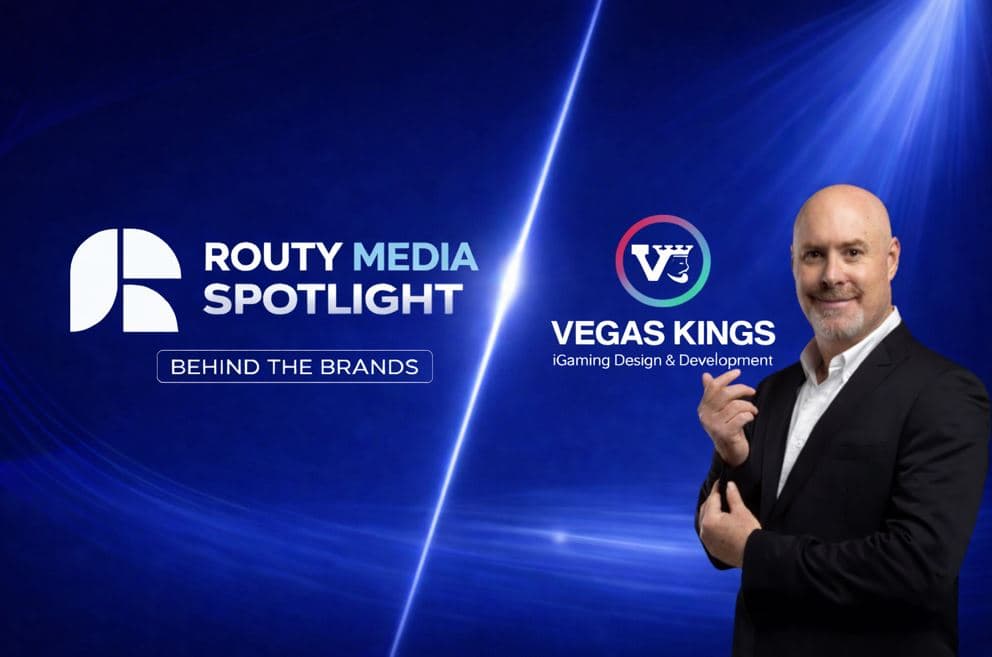
Routy Media Spotlight sat down with Moshe Adir Founder of VegasKings in this interview he shares nearly three decades of digital marketing evolution, from early SEO shortcuts to today's regulated and trust-driven environment. The conversation explores why algorithm changes, rising acquisition costs, and tighter regulation forced the industry to move from generating iGaming traffic to earning attention, and why trust, retention, and authentic brand building now decide who wins.
B - What has been the single biggest shift in digital marketing that forced you to rethink how brands compete and win player trust?
M-The moment Google got smart. In the early 2000s, iGaming marketing was a land grab. Buy Overture traffic, stuff keywords, watch players arrive. I watched affiliates go from worn-out sneakers to Ferraris in under a year because search engines were children you could trick.
Then Panda hit. Penguin hit. Operators and affiliates who had never invested in genuine brand equity were suddenly exposed. Their traffic vanished overnight.
That forced the entire industry to shift from gaming the system to actually deserving attention. You could no longer fake authority. You had to build it. That transition, from manipulating traffic to earning it, changed everything. And honestly, the industry is better for it.
B - What has been the hardest balance to strike between creativity, regulation, and technology?
M- Maintaining creative ambition within regulatory constraints. And it only gets harder as markets mature.The early Wild West days were creatively unconstrained. Provocative, bold, sometimes reckless. Marketing I saw in the late 90s would be unlawful in most regulated markets today.
When the UKGC tightened its grip, a lot of operators froze. Their marketing became so compliance-cautious it became completely forgettable.
The operators who found the sweet spot understood that regulation doesn't kill creativity, it focuses it. You stop relying on shock value and start building genuine emotional connection within a narrower lane. That discipline actually produces better work. The best iGaming campaigns I've seen recently are brilliant precisely because they had to work harder to be memorable.
B - What common marketing mistakes do you still see brands making in 2026?
Three things that never seem to go away. The bonus arms race. Operators still believe a bigger welcome offer wins players. It doesn't. It wins bonus hunters who disappear after wagering requirements. Sustainable players are built on experience, not on who offers the biggest number.
Ignoring the post-click experience. Serious acquisition spend driving traffic to a landing page that completely undermines the promise of the ad. The creative gets the click. The UX either converts it or wastes it. Too many marketing decisions stop at the click.
Copy-and-paste strategy. Operators mimic what competitors do on the surface without understanding why it works. You can't out-generic a competitor. You can only out-different them.
B - How do you decide when to prioritize performance marketing versus brand building?
The mistake is treating this as either/or. It isn't.
Performance marketing is a tap. Turn it on, traffic flows. Turn it off, or the algorithm shifts, it stops. I watched operators get kneecapped by Google's updates because their entire player acquisition model was rented, not owned.
Brand is the foundation. When a player already knows your name before they see your ad, your acquisition cost drops and your lifetime value extends.
The practical mistake is that performance shows up clearly on a dashboard. Brand spend is harder to measure short-term, so it's the first budget cut. I've watched operators celebrate that saving while slowly eroding the thing making their performance marketing work in the first place.
Simple framework: performance marketing feeds the business today. Brand building determines how long the business survives.
B - How did regulated US markets impact digital marketing strategy and player acquisition?
M- For VegasKings, this story happened twice. In 2006, UIGEA passed and we lost our entire American client base almost overnight. Operators who had been thriving had payment processors cut them off within weeks. We pivoted hard into European markets, which made us more globally diverse, but the sting was real.
When US markets reopened state by state after 2018, the environment was fundamentally different. Advertising channels restricted. Compliance obligations on affiliates that hadn't existed before. Acquisition costs genuinely eye-watering compared to grey market norms.
The UX shift was significant too. Regulated markets forced operators to lead with trust signals rather than assume them. Licensing, responsible gambling tools, transparent terms. Operators who came from markets where trust was assumed had to rebuild their entire player communication from scratch. The best ones figured out how to make compliance and conversion work together rather than fight each other.
B - How do data, personalization, and UX work together as one cohesive marketing system?
M- They only work if you treat them as a single ecosystem rather than three separate departments. Data is the intelligence. Personalization is the decision layer. UX is the delivery mechanism. Break the chain anywhere and the whole system underperforms.
I've seen operators with sophisticated CRM capability and genuinely rich player data sending generic banner campaigns that ignore everything the data is telling them. The intelligence exists. The execution doesn't connect it to the player.
When all three work together properly, the platform learns about the player, makes intelligent engagement decisions, and delivers an experience that feels like it was designed specifically for them. That's the standard the best operators are setting right now. The gap between them and everyone else is widening fast.
B - What digital marketing hype is overrated, and what underutilized strategy deserves more attention?
M- Most overrated: metaverse and VR casino experiences. Every year for six years I've heard "VR gambling is about to explode." It hasn't. It won't, not at scale. Most gambling happens on a phone, in ten-minute sessions, on a couch or a commute. A headset doesn't fit that use case. The mobile browser is still winning.
Most underutilized: retention-first marketing. The industry has an almost pathological obsession with acquisition, but the mathematics of lifetime value mean a modest retention improvement is often worth more than a significant acquisition increase.
You can have a leaky bucket strategy, pouring players in the top while they drain out the bottom, and no acquisition spend fixes that. Operators who invest seriously in gamification, loyalty mechanics, and personalised retention consistently outperform those spending the same budget chasing new players. The best businesses figured out the right balance. Most haven't yet.
B - What role should storytelling and emotional branding play as acquisition costs rise?
M- It becomes the primary differentiator. Genuinely. When every performance channel gets expensive and every operator runs similar promotions through similar affiliates targeting similar audiences, emotional resonance is what cuts through. It's the hardest thing to manufacture and the most powerful advantage when you have it authentically.
I started sharing my own story publicly in 2024 after nearly 30 years behind the scenes. The response surprised me. Not because the stories were extraordinary, but because they were real. Readers feel the difference between a story someone lived and a story constructed to sound like they lived it.
The same applies at brand level. Players don't have loyalty to platforms. They have loyalty to experiences that made them feel something. Brands that create and communicate those experiences genuinely will always command lower acquisition costs and longer player lifetimes than anyone treating marketing as purely a numbers game.
B - How has your approach to building and leading creative teams changed over time?
M- Significantly. And not always how I expected. Early on, hiring meant finding people who could execute the craft. Could you design a banner? Build a front-end? Technical skill was the qualification.
What 28 years has taught me is that execution is increasingly teachable and increasingly assisted by tools. What you can't teach is genuine curiosity about the business problem. The designers and marketers who've made the biggest difference for clients are the ones who want to understand why a player behaves a certain way, not just which asset to put in front of them.
I've also become a strong advocate for the hybrid model. Internal teams own brand consistency and daily operations. External specialists bring deep conversion expertise and fresh perspective. Internal teams go stale in isolation. They stop seeing what the player sees. External partners keep you honest. The operators who figure out how those two work in genuine partnership are consistently outpacing everyone trying to do it all in-house.
B - What core marketing principles are timeless regardless of platforms, algorithms, or technology shifts?
M- Three things have been true since 1997 and will still be true in 2047. Trust is the product. Everything else is packaging. Every creative choice and UX trade-off should be evaluated against whether it builds or erodes player trust. That never changes.
Your acquisition cost is always determined by your retention quality. If players stay, your economics improve across every channel. If they leave, you're running a treadmill. The best marketers never separate these two strategies. They see them as one continuous player relationship.
Authenticity scales, inauthenticity doesn't. I've watched operators try to manufacture brand personality with expensive campaigns and watched others with a genuinely distinctive voice grow passionate player communities almost organically. The difference is always whether something real sits at the core.
The platforms change. The algorithms change. The psychology of what makes a person trust something enough to deposit money and keep coming back has never changed once in 30 years of watching it up close.
Related Posts
 17 min
Affiliate Programs in the Betting and Online Casino Industry: A Complete Guide
This guide is here to tell you all you need to know about casino affiliate programs. Perfect for anyone looking to receive commission for sharing their love of casino gaming. Here you will learn what casino affiliate…
 12 min
Affiliate Programs in the iGaming Industry: A Complete Guide
This guide is here to tell you everything you need to know about using an iGaming affiliate program. We’ll cover all the info you need to start getting commissions for referring people to iGaming platforms. Here you’ll…
 14 min
Affiliate Programs: A Complete Guide
If you have a talent for marketing and want to secure a new revenue stream, affiliate programs are a great option. These will reward you for every new customer or sale you help a business achieve. Here you will learn…
Ready to get started?
Join thousands of teams already using Routy to optimize their routes.
Start Free Trial